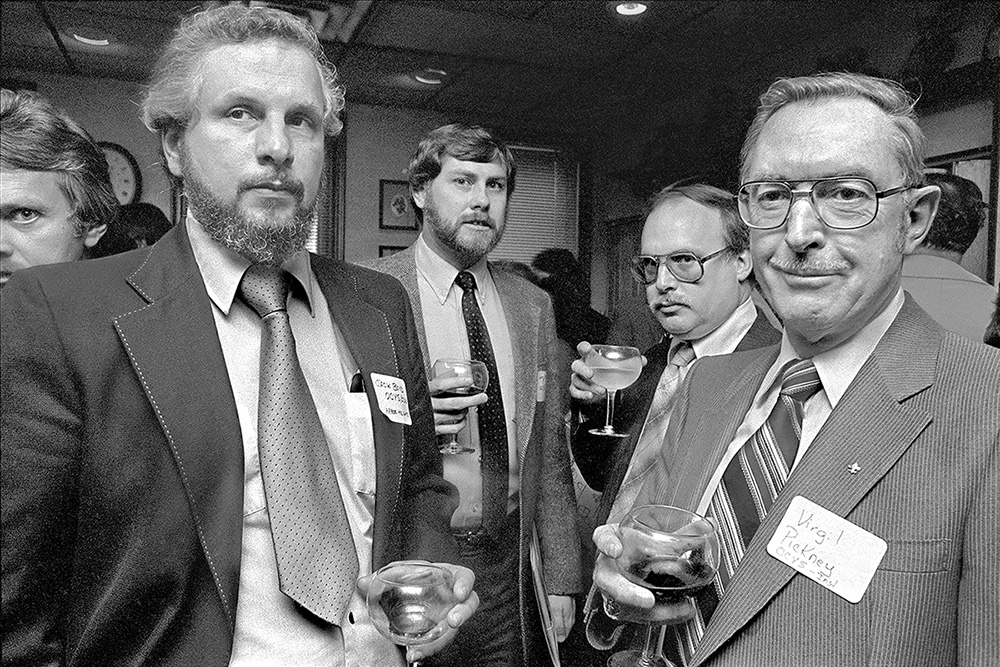
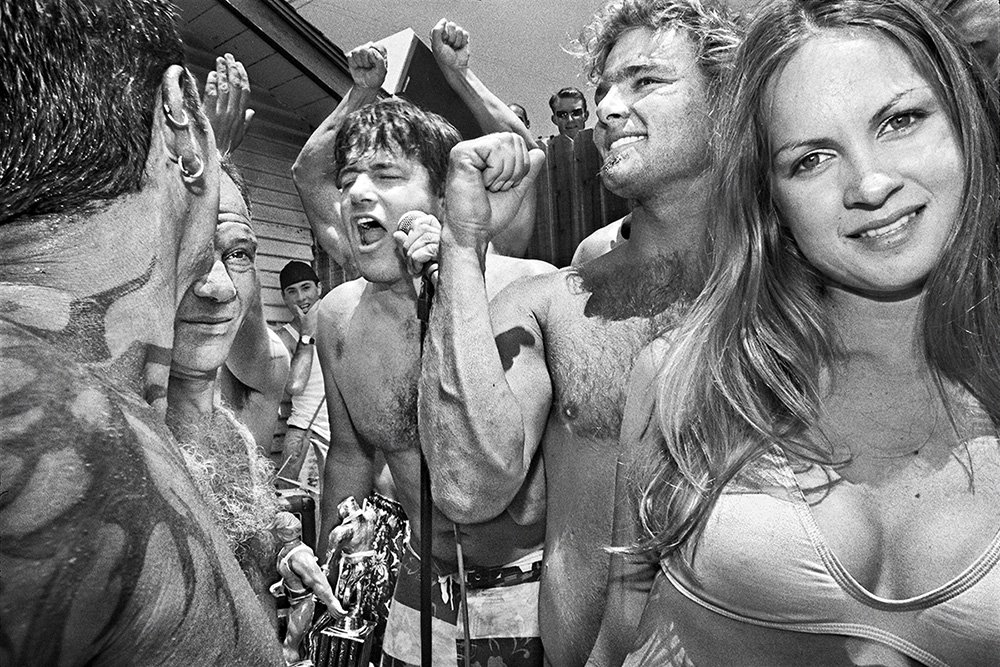
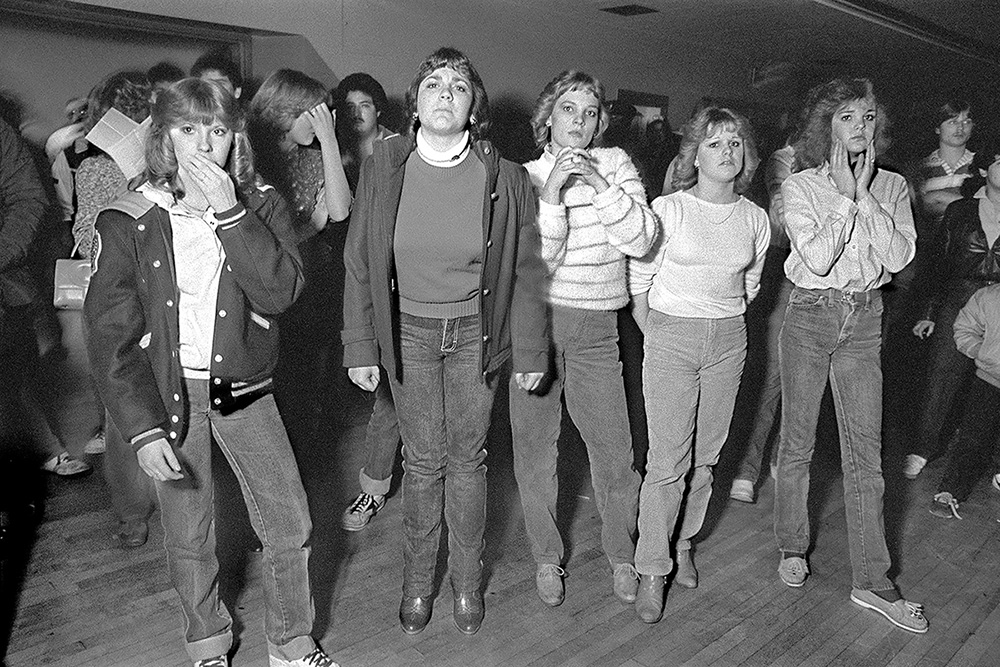
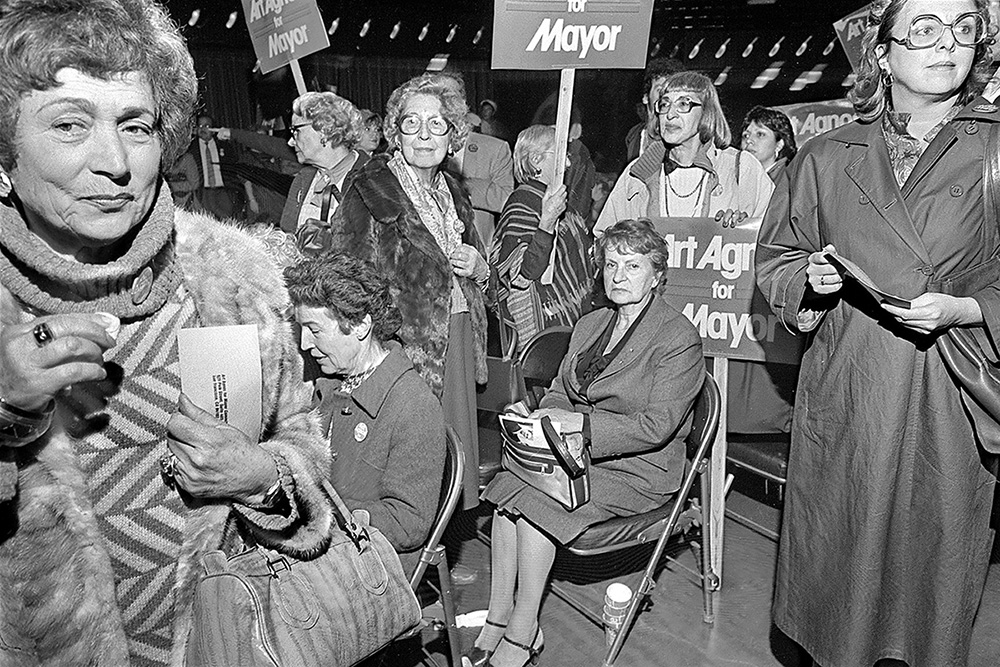
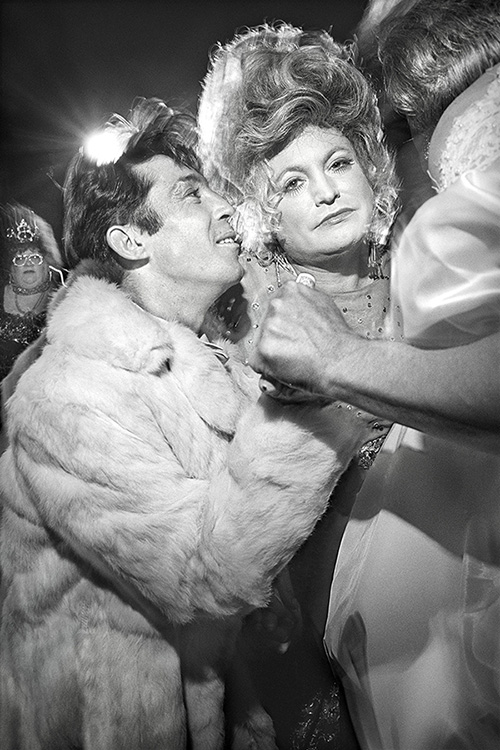
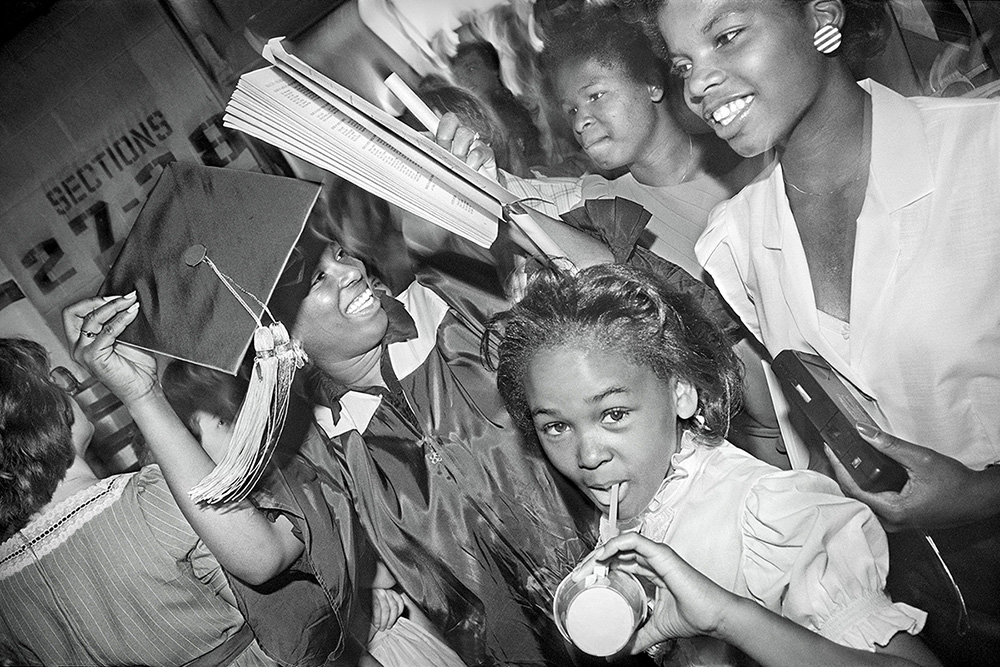
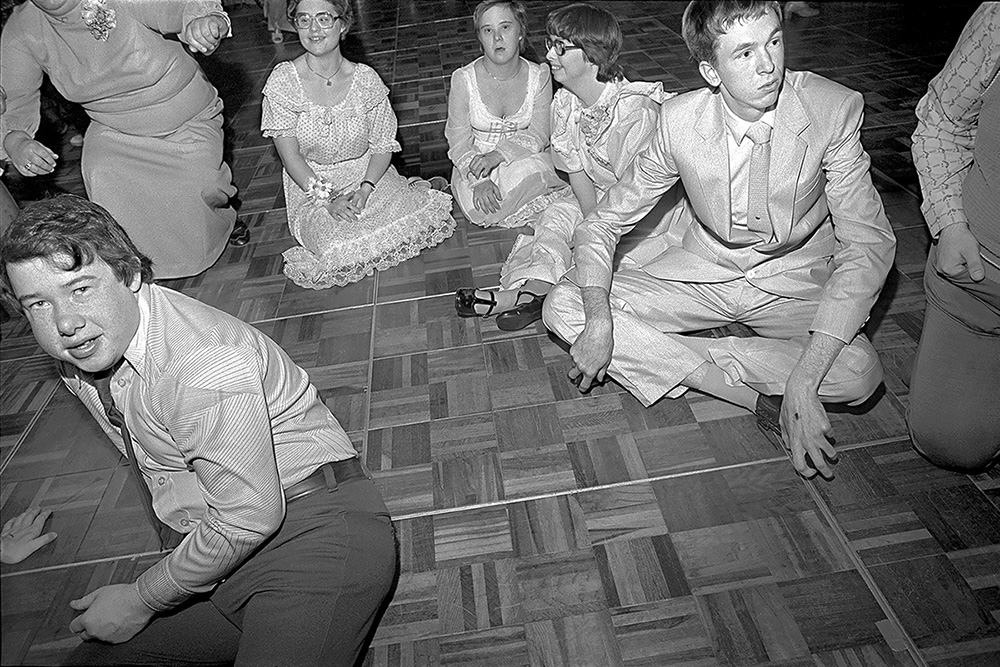
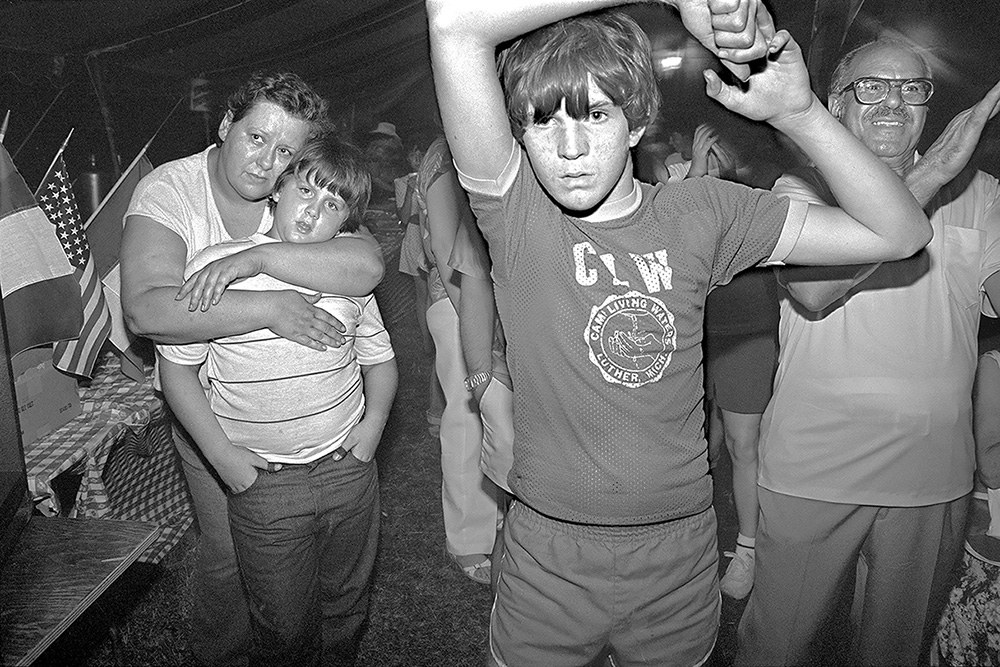
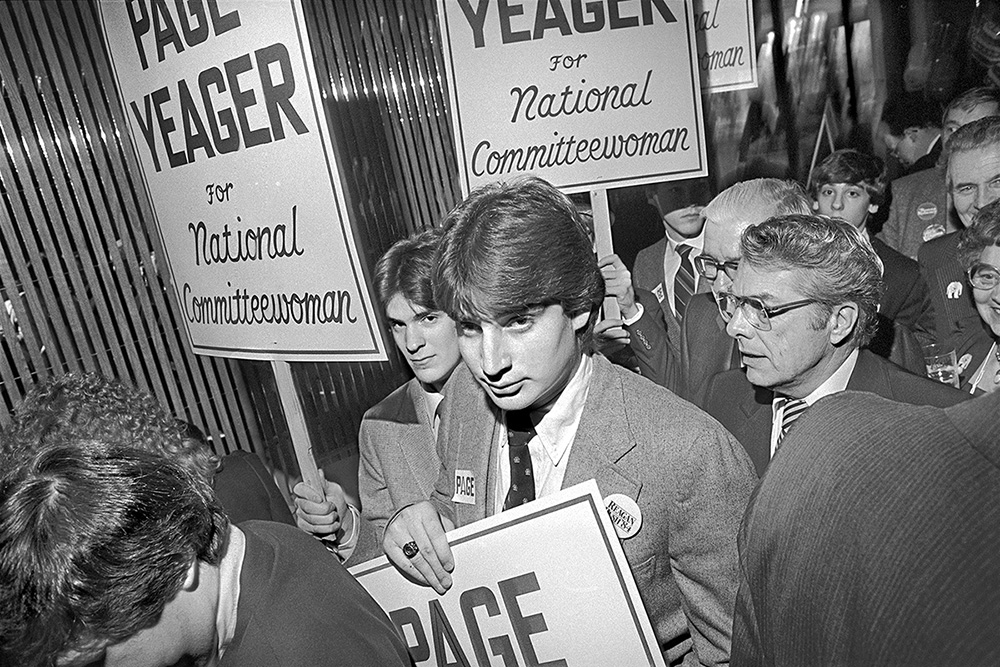
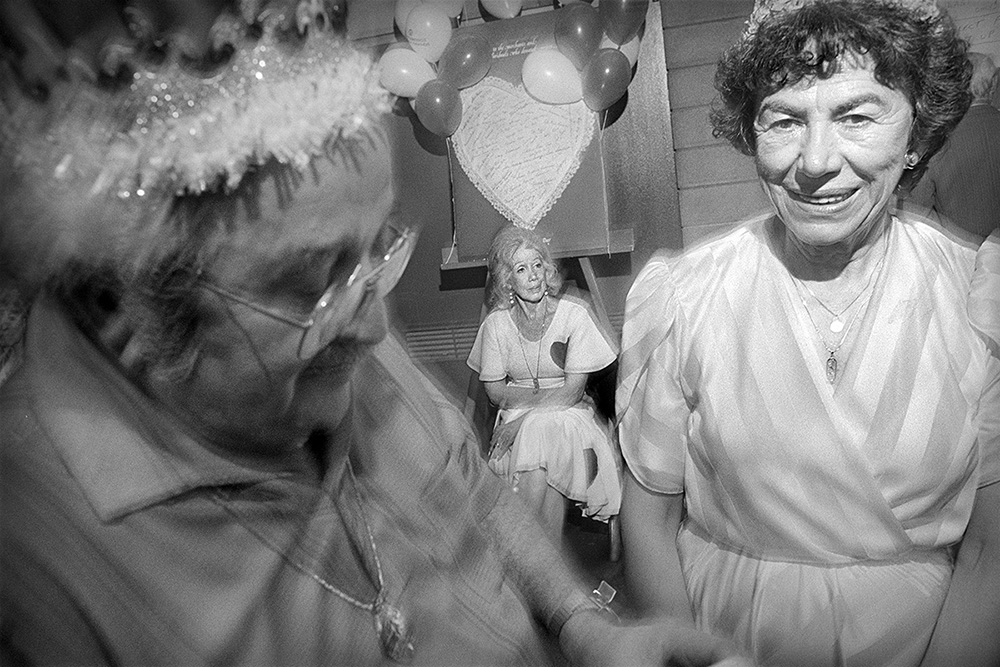
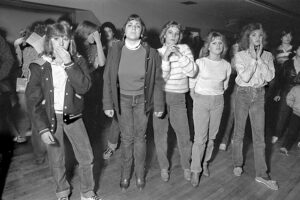
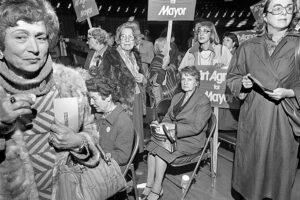
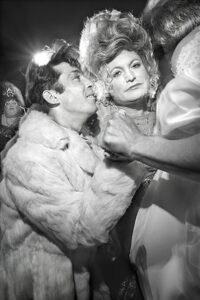
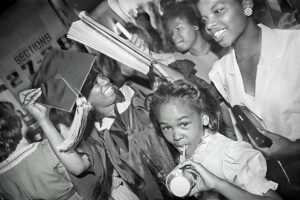
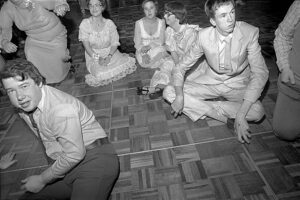
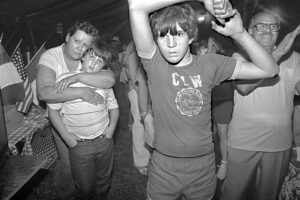
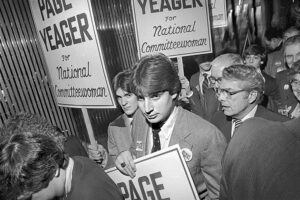
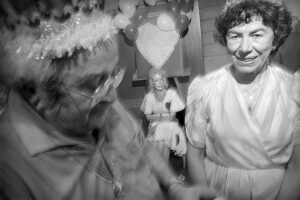
When I taught myself photography in the 1980's, two of the most popular exemplars were Diane Arbus and Garry Winogrand. I wished to make street portraits like Arbus, but lacked the personal gumption for it; I was much better suited to the "action" and flow of Winnogrand's style. As I developed my version of that style, I noticed that my favorite pictures often included a kind-of portrait, hiding in plain sight. The implicit, winking agreement between the photographer of such up-close pictures and the audience they serve, is that photographer is functionally invisible, or that her trigger finger is fast enough to outrun the attention of subjects that'll discover her any second. But those frames that drew me always featured a lone watcher who looked up through the tangle of bodies, straight into my lens, breaking that fourth wall I was protecting like a sacred covenant. For a couple years I pursued that "relationship", waiting and hoping to be seen by that one eagle-eyed empath, amidst the chaos of the moment. Naturally, the photographs that emerge make evident the convention of the "fourth wall" at the same time as they break it. The presence of the photographer, suddenly quite salient, is made available for interrogation––especially her role as the "narrator" of the image. A fleeting, two-way voyeurism, in the middle of the public sphere, is enacted––eye to I––which lingers in the picture afterward: an uncanny, slightly unnerving moment of recognition, curiosity, connection, and accusation.