CRITICAL MASS BOOKS


CRITICAL MASS 2008 BOOKS

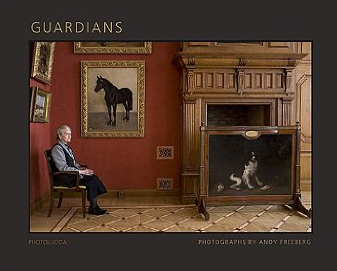
Andy Freeberg    Guardians
Order

The “Guardians” are former economists and dentists, engineers and singers, teachers and clerks — a corps of grandmothers perched on chairs throughout Russia’s finest museums, forming a kind of latter-day addition to artistic landscape. They are the guardians of the country’s masterpieces, but also of much more. This series of photographs reflects the singular role that these women play in both the Russian art world and society as a whole. These women occupy a significant place in Russia, purveyors of wisdom and keepers of cultural traditions. Grandmothers in some sense rule not only the museums, but also the streets.

One woman described how even on her day off, she comes to the museum to sit by a painting because it reminds her of the countryside during her childhood in Ukraine. “I’ve been working here for 10 years and it feels like one day, I love it so much,” she said.

The photographs that Freeberg took at four museums in Russia — the Hermitage and Russian Museum in St. Petersburg, and the Tretyakov and Pushkin in Moscow — present a humanizing contrast. These guardians are not only visible, but exert a powerful hold over the viewer, in some sense helping to bring the art to life.

- Clifford J. Levy, New York Times Moscow Bureau Chief

Hardbound, 64 pages, 37 photographs, cloth/embossed image on cover, text in English and Russian

More about Guardians, click here!


Céline Clanet    Máze
Order

The subject and outline of the pictures in the book concentrate on the Sámi people. They spread out over an immense area, from the extreme north-west of Scandinavia as far as the Kola peninsula, in Russia. These people survived for thousands of years in extreme climatic conditions. Their existence is often precarious, as they have lived through periods of colonization, and the gradual erosion of their culture. The “Máze” series of photographs touch upon the environmental, political and economic aspects of the Sámi, but the pictures are also concerned with vital contemporary issues such as IT globalization, the preservation of individual identity, as well as broader issues.

The pictures of Céline Clanet seem to share a documentary vision and a conceptual approach. This juxtaposition translates into one of her main concerns: the importance of time present. For her, life consists of a succession of moments set firmly in the present, not events which occur or have occurred after a lapse of time, highlighted by some seminal event...she shows that action and contemplation, daydream and objective observation are all one, and go together as an integral part of life. They can also, thankfully, generate sensations of wonderful serenity despite a sometimes hostile background.

- Awen Jones, Curator/Writer

Hardbound, 80 pages, 52 photographs


Priya Kambli    Color Falls Down
Order

Priya Kambli’s works introduce us to an unfamiliar language. These elegant statements force us to pause, to learn and utilize at least one new mode of translation. The reading requires effort; there are several distances to cross to unveil their full meanings. She applies her translation skills to images that derive meaning from cultural, inter-generational, and trans-global sources. She is making viewers — not from her family, not Indian, not first-generation immigrant — confront a set of symbols and relationships that do not fully reveal themselves on first encounter. The success of her work, however, lies in its eloquent capacity for fascination. It employs many devices; pattern, texture, screens, color, and mysterious deletions and exclusions weave a tale of vulnerability, transience, inheritance, and transformation. And the photograph as an evanescent container of memory has a vital role.

Kambli discovers her heritage in herself and her surroundings, employing a photographic strategy of longing as a means of translation. Her longing is both retrospective and anticipatory — longing for a future in which the past makes sense, in which a fragmented sense of self is made whole.

- George Slade, Independent Curator

Softbound, 64 pages, 32 photographs


Back To Top


CRITICAL MASS 2007 BOOKS

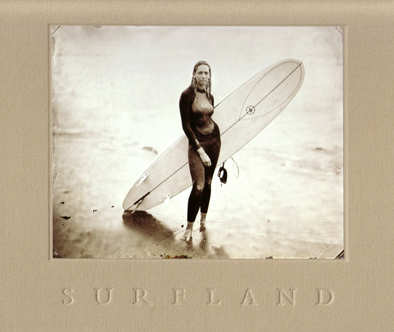
Joni Sternbach    SurfLand
Order

Sternbach makes her photographs in tintype, a labor-intensive technique little changed since it’s invention in the 1850s. Spontaneous and unpredictable, the streaks and tonal variations in the finished photographs reflect their hand-made character, the corners rubbed where they were held in the camera.

Posing on rocky outcrops, in front of uprooted trees, or on thick mats of woody flotsam, Sternbach’s surfers inhabit strange landscapes. The best of Sternbach’s photographs convey insistent longing. They are about relationships — the relationship between surfer and board, between human and landscape, between photographer and subject, and between the surfers themselves...she has discovered a new sort of home — a place without walls, defined only by belonging and the physicality of existence.

- Philip Prodger, Curator of Photography, Peabody Essex Museum

Hardbound, 80 pages, 52 photographs, cloth/embossed image on cover


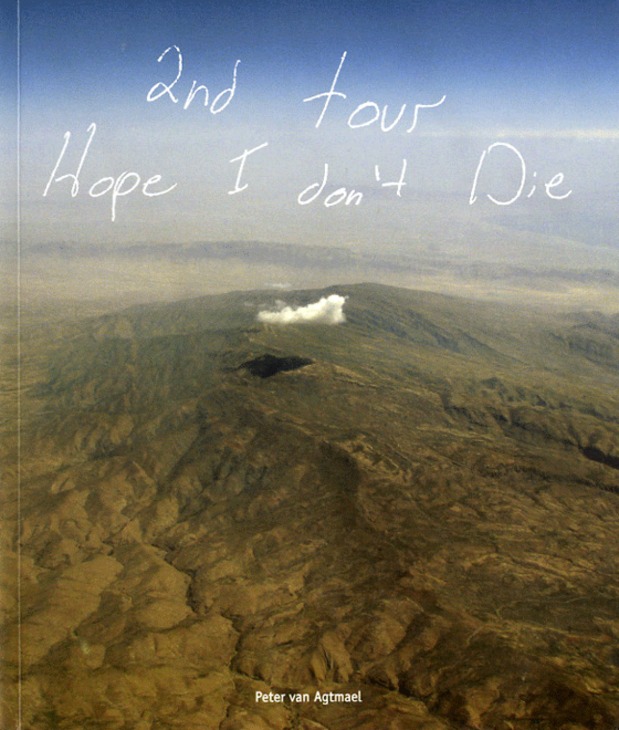
Peter van Agtmael    2nd Tour Hope I Don't Die
No longer Available

A deeply affecting look at the reality of America’s wars in Iraq and Afghanistan from 2006-2008. Through Peter van Agtmael’s lens, a delicate humanity emerges amid the chaos and brutality of combat.

As an embedded photographer, van Agtmael follows the great sweep of the war with his camera — from graphic casualties, medical evacuations, and the aftermath of suicide bombings to moving portraits of young soldiers and their families recuperating, mourning, and surviving the harrowing consequences of war. Throughout, van Agtmael’s diaristic narrative provides context for the horrors he witnessed, while often revealing the dark, inevitable ironies that occur in an environment where the necessities of daily life are forced to intersect with unspeakable violence and death. By turns gritty, haunting, and deeply moving, the book is a document of loss — and a cogent reminder of the costs of war.

- Laura Valenti, Newspace Center for Photography

Softbound, 112 pages, 74 photographs


Back To Top


CRITICAL MASS 2006 BOOKS

Camille Seaman    The Last Iceberg
Order

Nick Cave once sang, “All things move toward their end.” Icebergs give the impression of doing just that, in their individual way much as humans do; they have been created of unique conditions and shaped by their environments to live a brief life in a manner solely their own....The Last Iceberg chronicles just a handful of the many thousands of icebergs that are currently headed to their end. I approach the images of icebergs as portraits of individuals, much like family photos of my ancestors. I seek a moment in their life in which they convey their unique personality, some connection to our own experience and a glimpse of their soul which endures. These images were made in both the Arctic regions of Svalbard, Greenland, Iceland and Antarctica.

- Camille Seaman

It is difficult to interpret the poignancy of Sesaman’s images. This is where the ice leaves off and some mysterious craft begins. There is a numinous and extraordinary presence in this work, the difference between nature and photography and art...we see through Camille’s eyes entities in the gloaming light.

- Paul Hawken

Hardbound, 64 pages, 29 photographs


Amy Stein    Domesticated
Order

Amy Stein crafts photographic allegories set simultaneously in a number of different liminal spaces. Her sure and realistic color works manifest the place where the human-built meets the wild, but in addition they show us where the factual descriptive image meets fiction. Despite their apparent realism, her images are posed and constructed, sometimes using models and taxidermy props, sometimes using the bodies of dead or living animals to re-create, record and perform actual events that occurred in the small Pennsylvania town of Matamoras.

What at first appears to be a series of photojournalistic decisive moments is revealed, at a second look, to be a powerfully imagined vision that establishes its strength through its very artificiality. (Stein’s images) are used as a means to manifest and examine the human condition and the state of the planet, while never abandoning the essential groundedness of her informants, and the realities of their specific tales.

- Alison Nordström, George Eastman House Curator

Softbound, 64 pages, 25 photographs


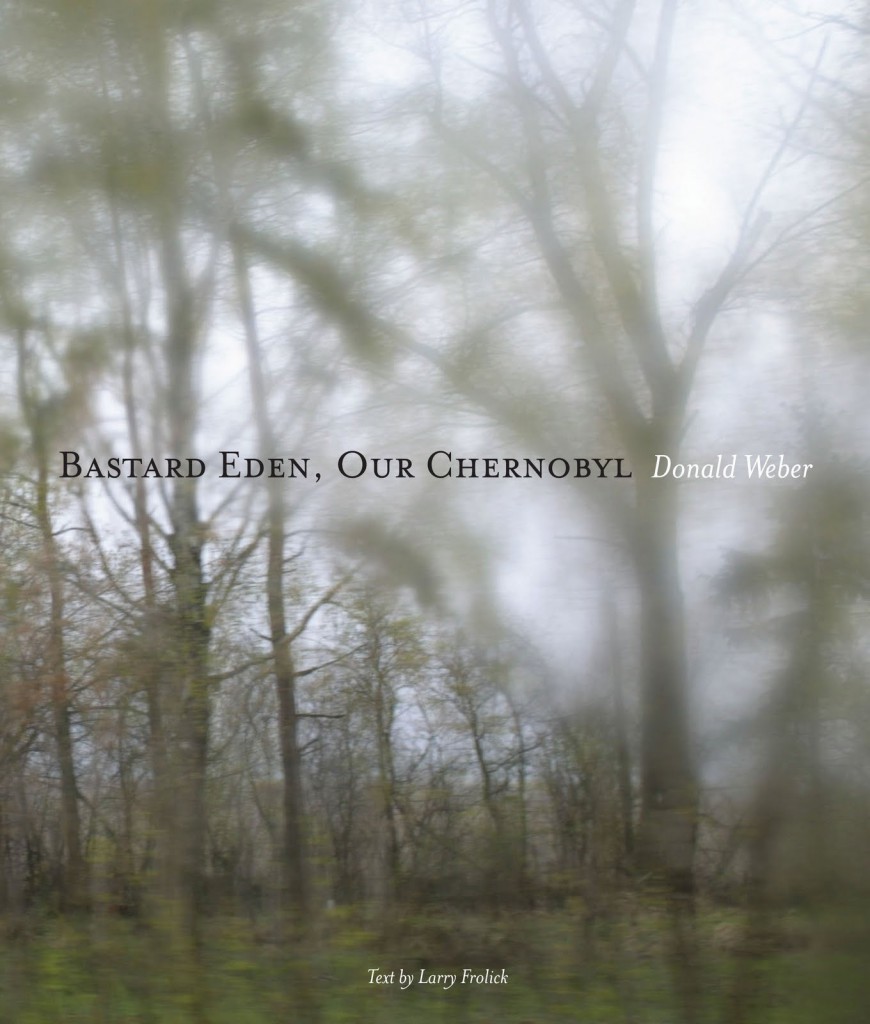
Donald Weber    Bastard Eden, Our Chernobyl
Order

These photographs were taken over three years, in the region of Chernobyl, Ukraine — some 20 years after the nuclear reactor incident of April 26, 1986. That first morning, as the plume of radioactive debris fell across the land and into the rest of Europe, the authorities evacuated the city of Pripyat and created a 40-kilometer Exclusion Zone around it. The 50,000 residents had fifteen minutes to leave, and never returned. Today a ring of silent fire surrounds these pine woods and abandoned apartment buildings. People are not supposed to live here; wild boars, rabbits and deer thrive in the lush greenery. Even the steppe wolves have returned.

Don Weber began visiting this region, because he wanted to see what was there. He had little interest in theories of history, or root causes. His question was simple: What was daily life actually like, in a post-nuclear world?

- Larry Frolick

Softbound, 64 pages, 60 photographs


Back To Top


CRITICAL MASS 2005 BOOKS

Hiroshi Watanabe    Findings

Order

Hiroshi Watanabe’s gorgeous monograph “Findings” shows, in a subtle and elegant way, small stories of daily life in far-flung corners of the world such as Ecuador, Japan, Burma, Iceland, and Tahiti. In these images, seemingly simple, Watanabe’s wisdom emerges without visual complications.

“These are honest and direct pictures; they bear a heavy silence, and are uncomplicated, singular ideas. These words invite a closer look uncompromised by time. They suggest a meditation that can bring to the surface what could otherwise have remained hidden — that opening in the sky beyond the child and his maze, and what it can mean.”

- Anthony Bannon, George Eastman House Director

Hardbound, 64 pages, 57 photographs


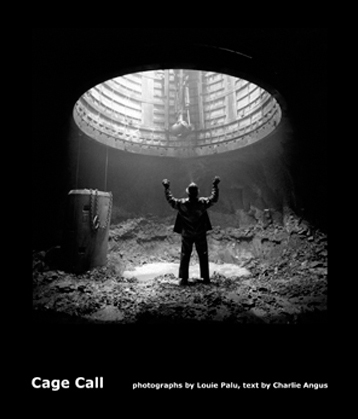
Louie Palu    Cage Call: Life in the Hard Rock Mining Belt

Order

“Cage Call: Life in the Hard Rock Mining Belt,” documents the people, land, and work in the mining region of Northern Canada. From quiet landscapes of the surrounding areas, to haunting portraits of the miners, to dramatic, shadowy images inside the shaft, Palu’s images simultaneously tell the humanistic stories of miners, their wives, and communities, as well as those of the industry, history, and tension between labor and enterprise. Identity, community, life, death, all swept together in the folds of light and shadow within Palu’s photographs.

“These images relate to a photographic tradition pioneered by Leslie Sheddon in Nova Scotia, Russell Lee in West Virginia, Bill Brandt in Wales, and Sebastiao Salgado in his more recent images of South American miners. Palu’s mining project also has strong links with Steve McQueen’s video Western Deep, shot in a South African gold mine.”

- Bill Jefferies, Director Simon Fraser University Art Gallery

Softbound, 64 pages, 48 photographs, text by Charles Anguss


Sage Sohier    Perfectible Worlds

Order

“Perfectible Worlds” is about people’s private passions and obsessions. Begun soon after 9/11/01, the series portrays people transported into worlds and activities over which they have near-total control. The photographs range from portraits of some who make extravagant miniature worlds, to others who have extraordinary collections or who immerse themselves in unusual pursuits. Each photograph is the discovery of a particular world an individual has found or created for himself — a private world that few are privileged to see.

“Sohier’s encounter with the marvelous takes us deep into private terrain, into a world of near-obsessive collections, hobbies, adornments, achievements, and attentions to detail. Her images register a desire for perfection and control in a world that — more often than not of late — seems to have slipped into chaos, destined for political and environmental ruin.”

- John Beardsley, Harvard University

Softbound, 64 pages, 58 photographs


Back To Top