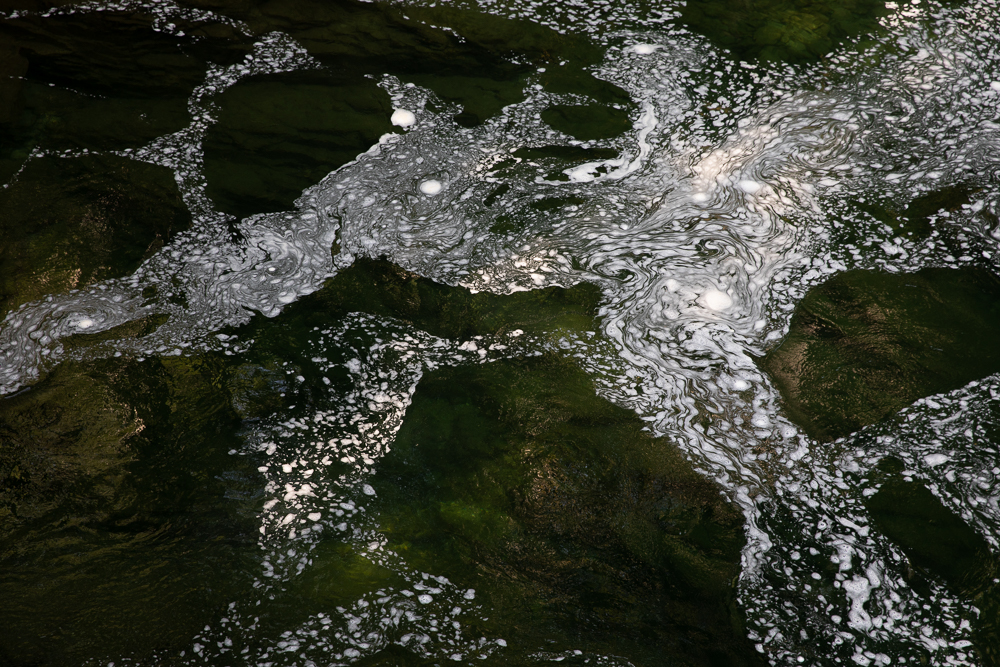
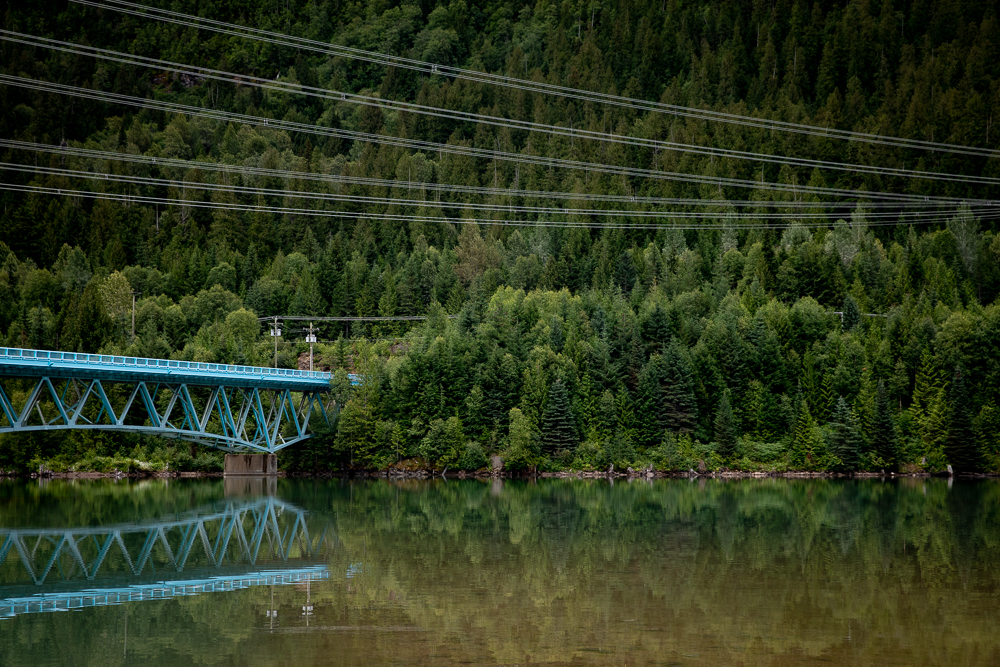
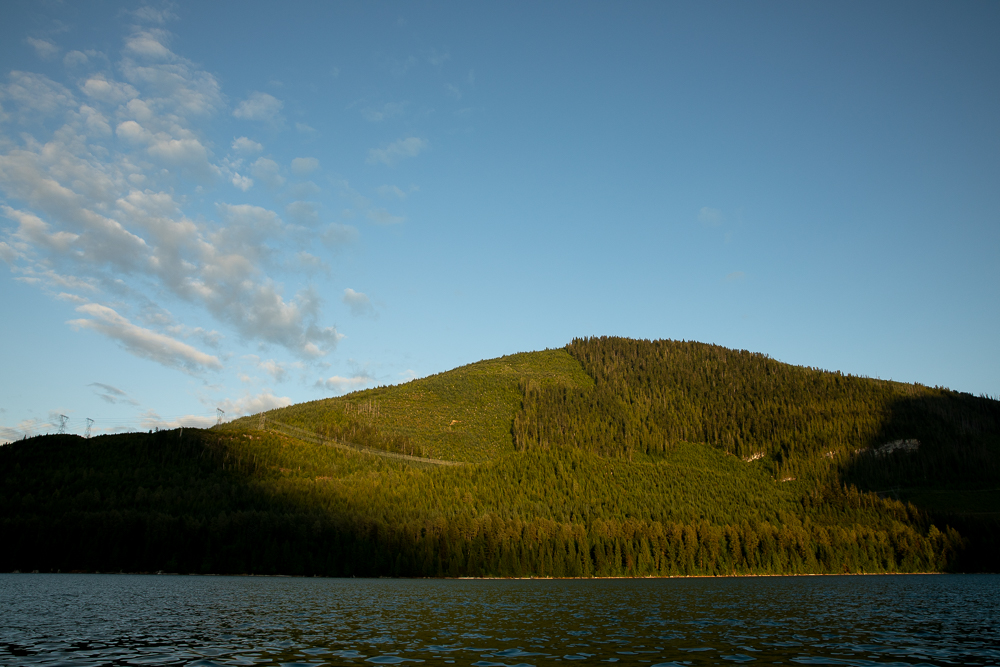
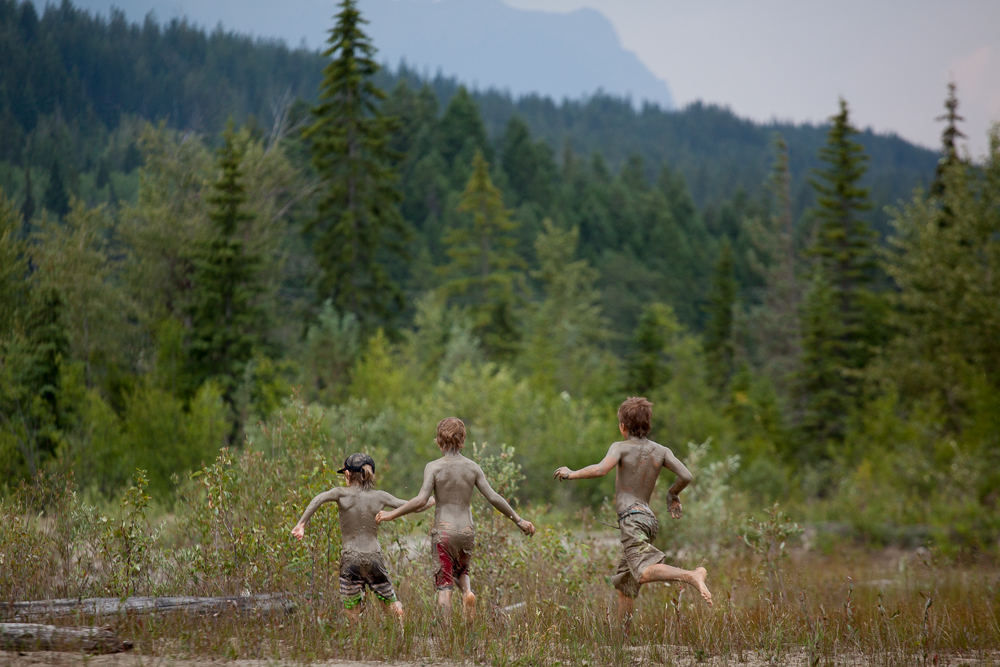
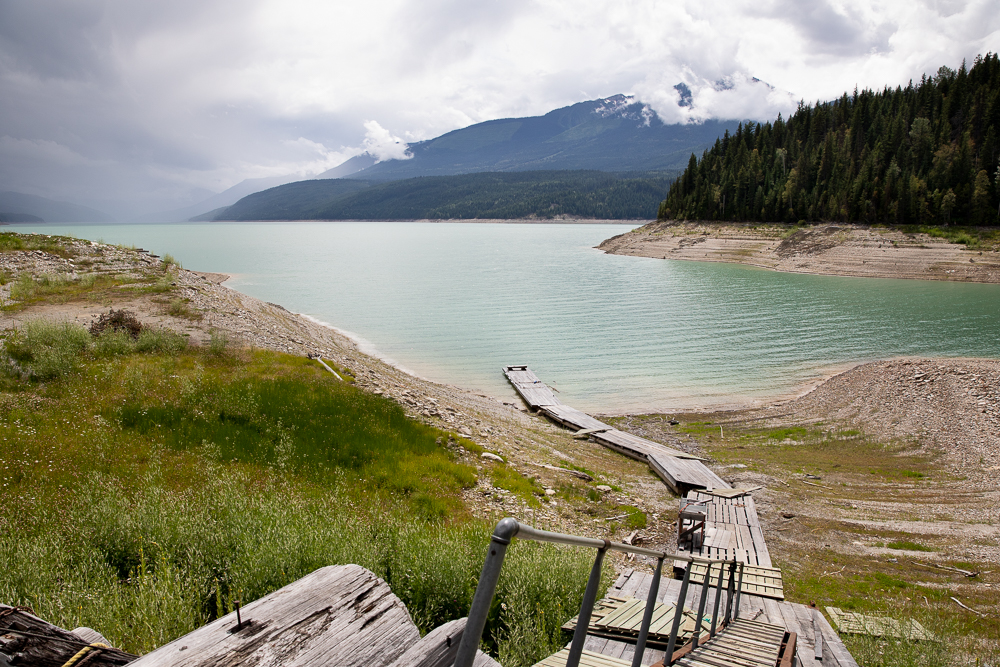
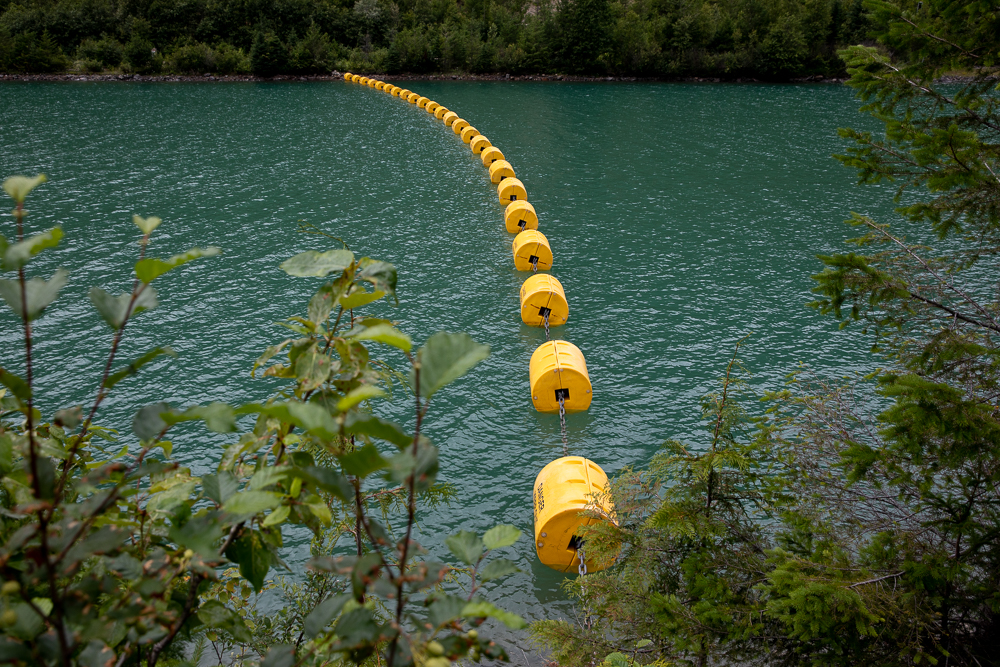
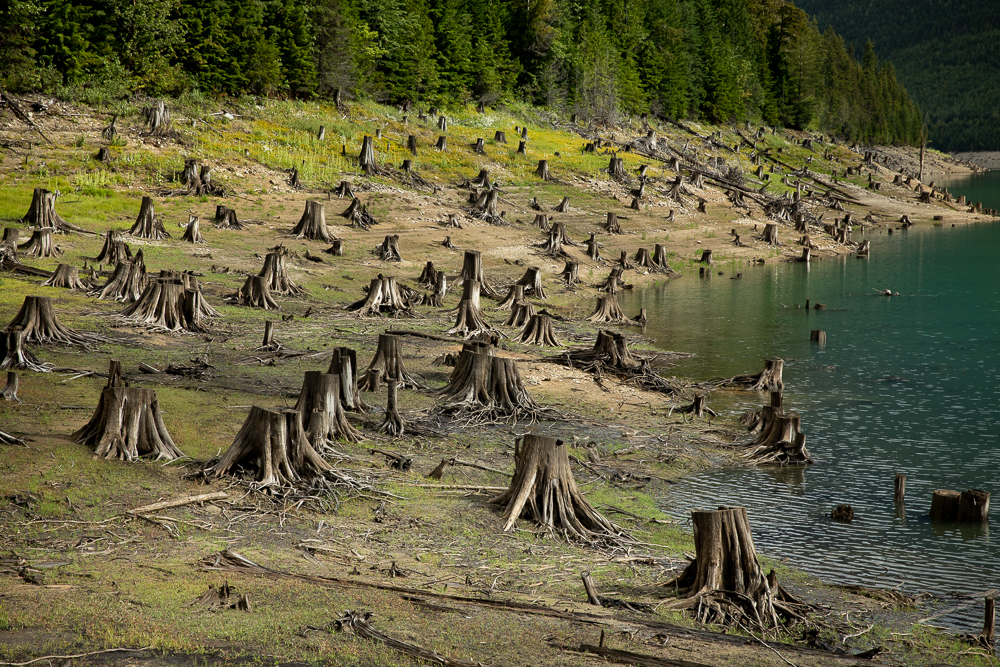
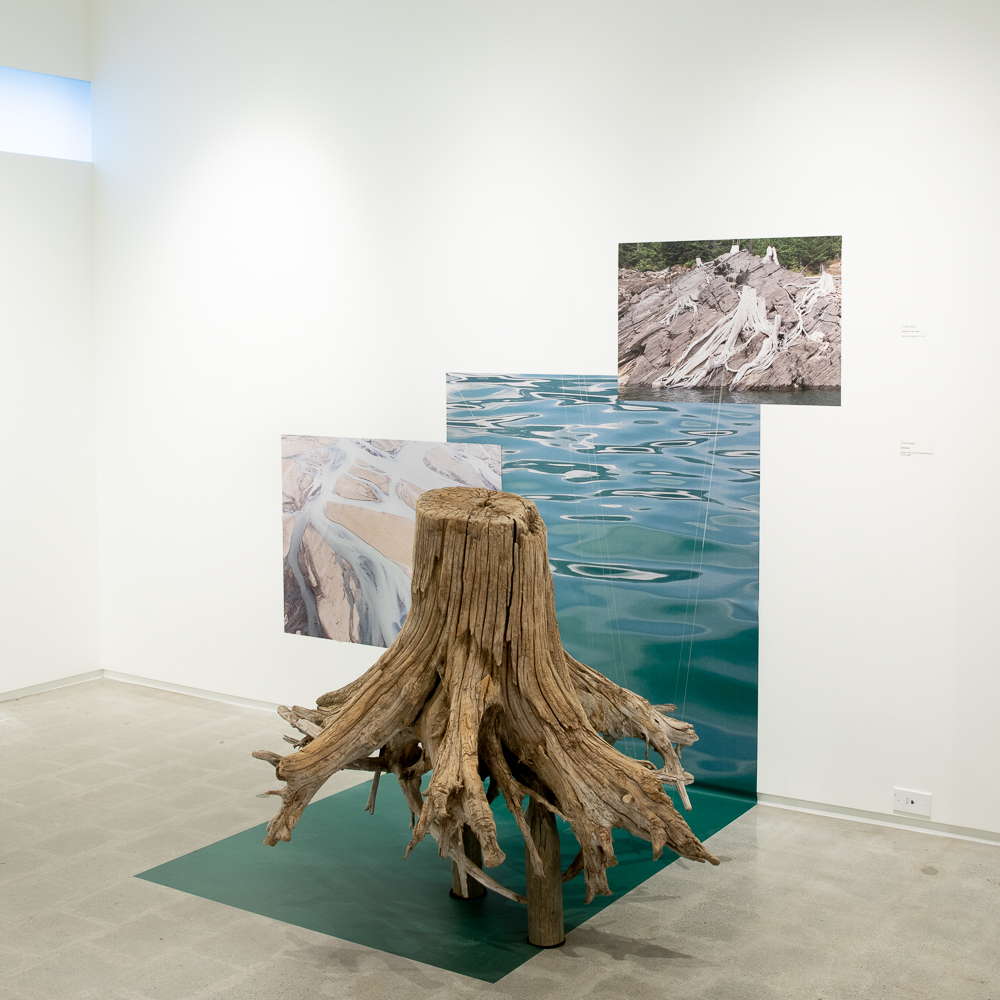
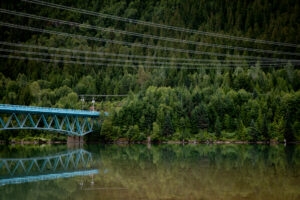
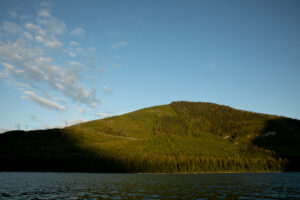
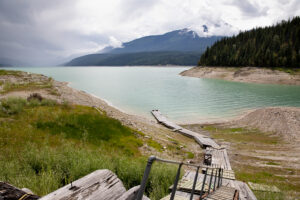
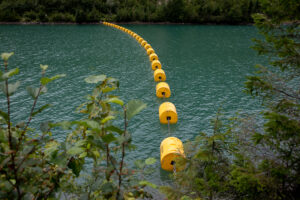
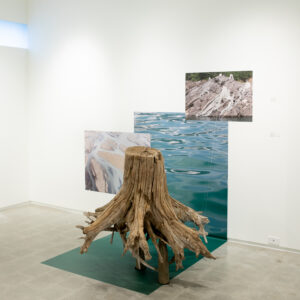
Can we find awe in a compromised landscape? As a longtime river enthusiast and a dual US-Canadian citizen, I sought to answer this by paddling all 1200 miles of the Columbia River, from source to sea, interior British Columbia to the Oregon coast. Solo for 3.5 months in a kayak that I built (with help from my dad), I journeyed along a waterway now fragmented by 14 dams and their vast reservoirs. Throughout, I was testing the theory that connection to the natural world can endure even within deeply altered landscapes. This selection of images is a small sample of the broader narrative project, which is itself an inherently incomplete vantage point on a massive river system amidst international treaty renegotiations.
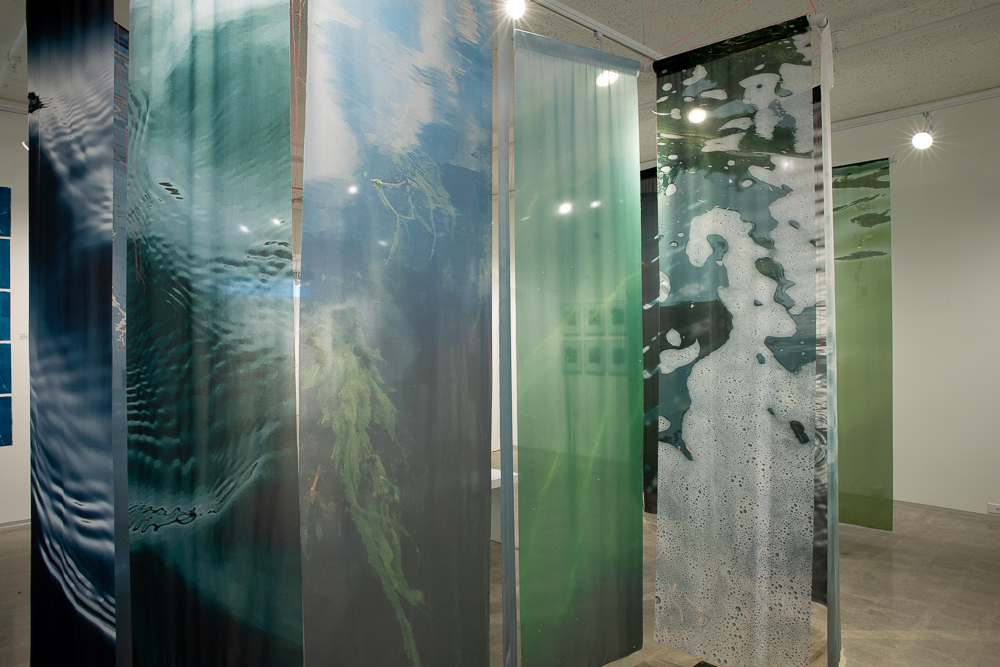
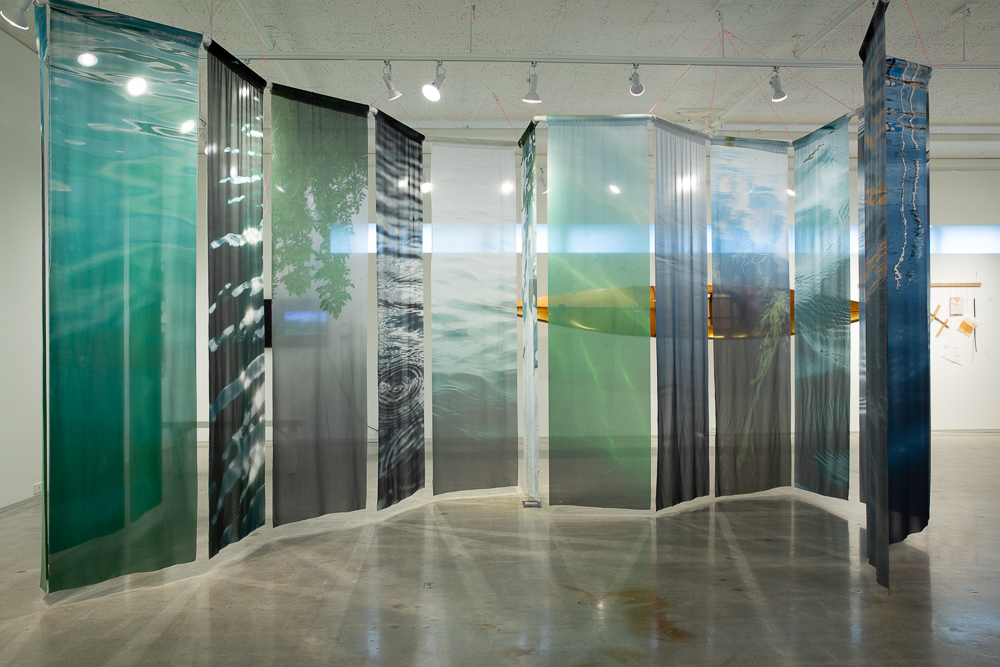
To translate this intimate journey into a physical space, digital images were dye-sublimated onto large-scale fabric panels. Designed with active viewing in mind, sheer textiles hang sequentially, inviting viewers to physically navigate through overlapping layers of water. As their bodies move through the space, viewers gently displace the air around them, directly impacting the shape of the installation. In doing so, they may note that our mere existence, even subtle everyday choices, affect the waters of this world in tangible ways.
This body of work is designed to function simultaneously as an immersive gallery experience and a tangible book object, which is currently in the format of a hand-bound artist book dummy. By weaving outputs together, the broader project doesn't attempt to map the whole watershed, but rather offers a deeply personal inquiry into what remains wild in a world that is constantly reshaped by human touch.