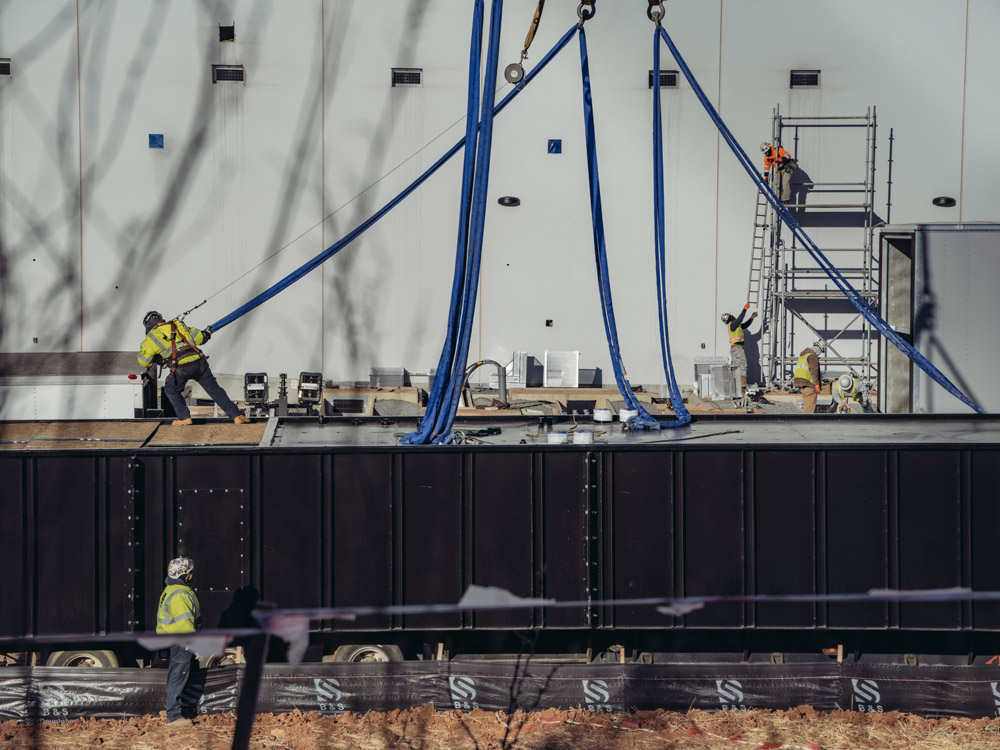
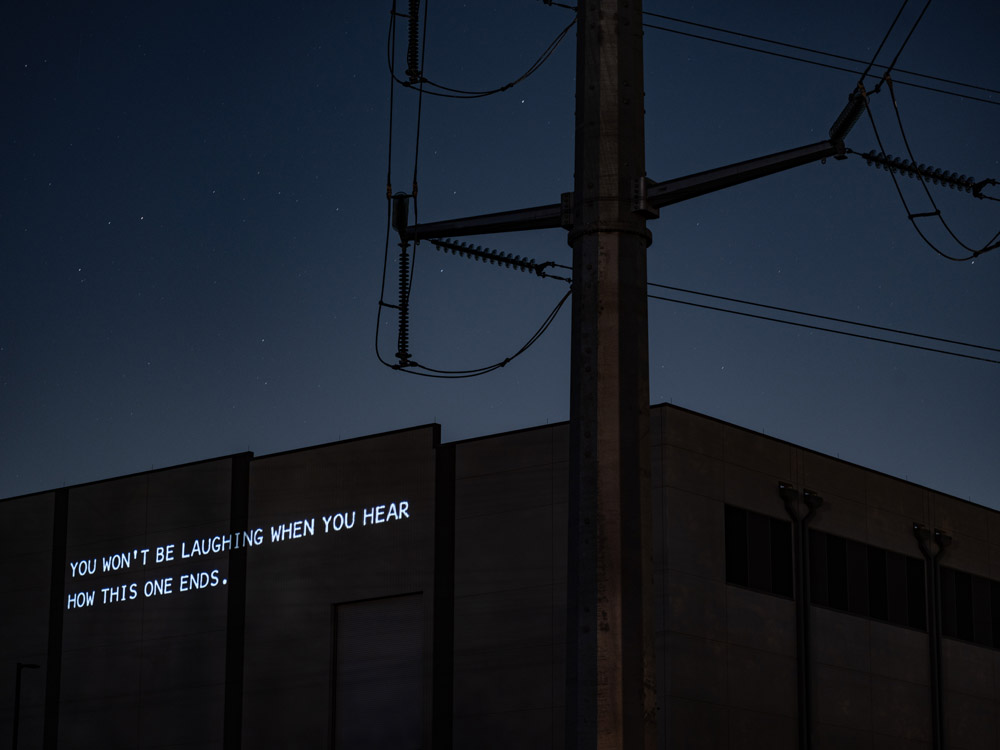
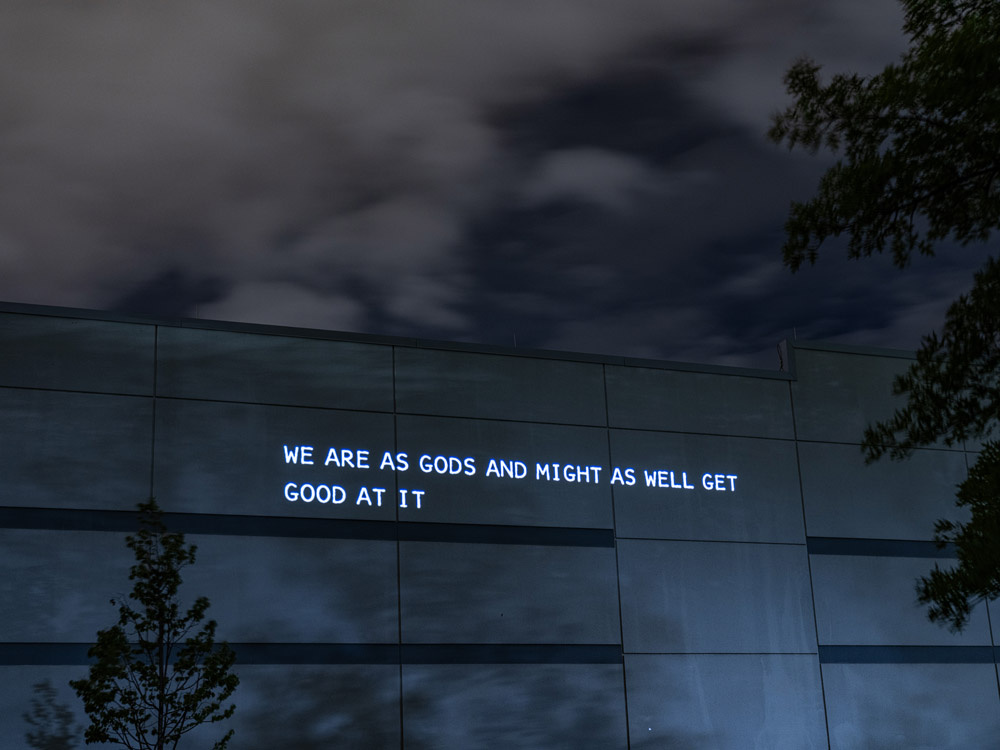
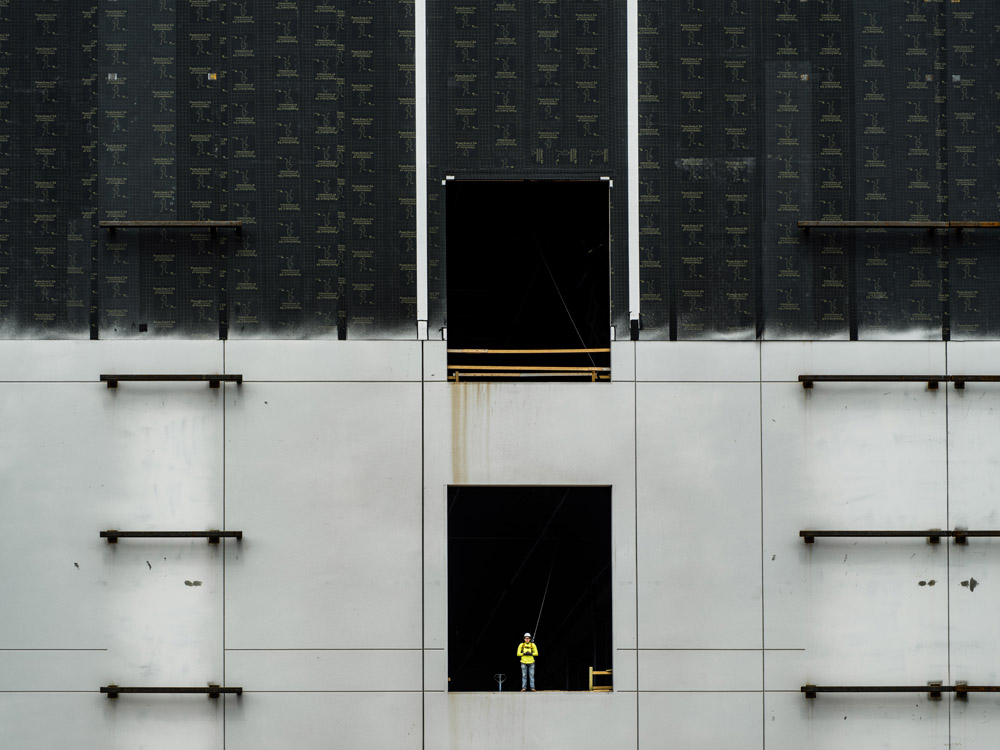
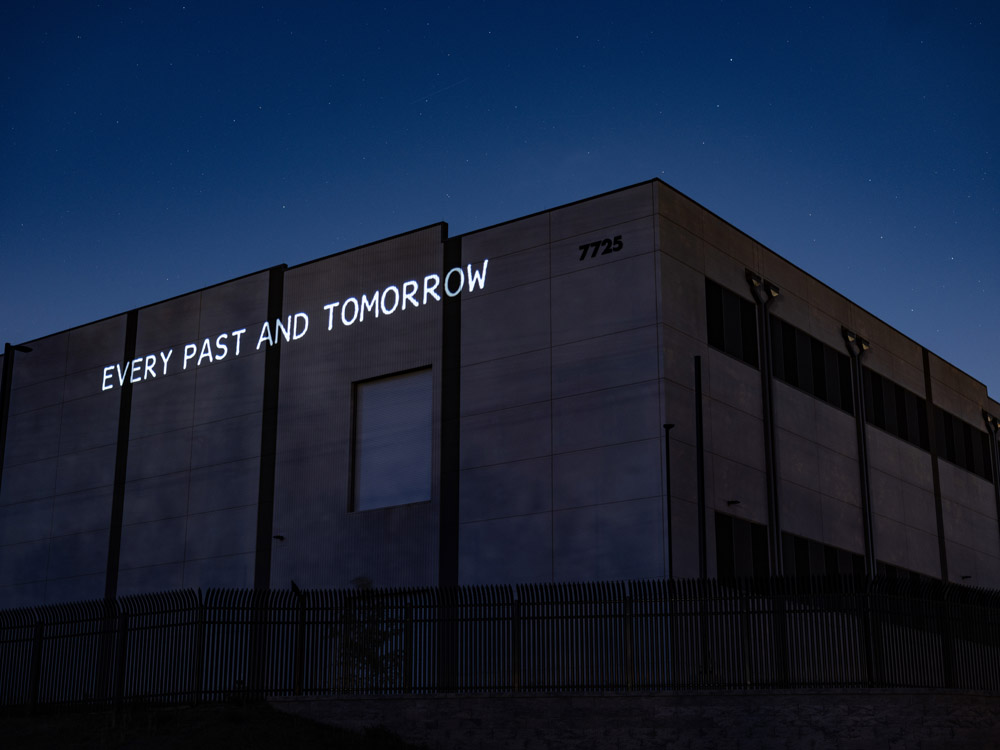
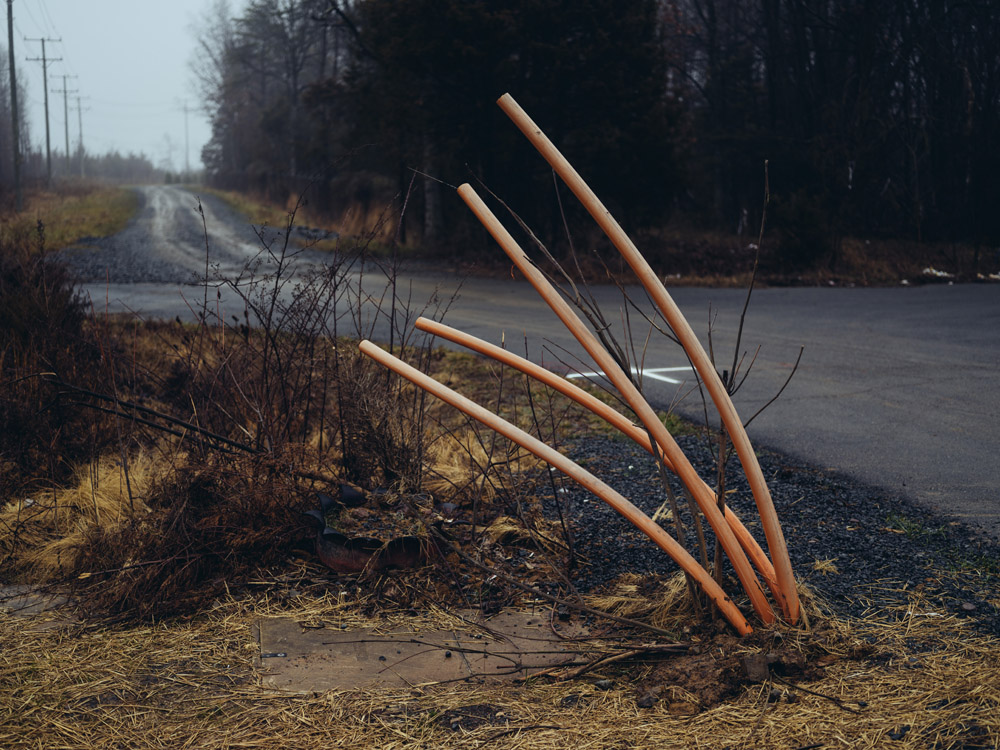
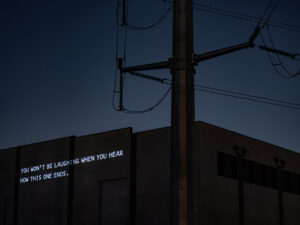
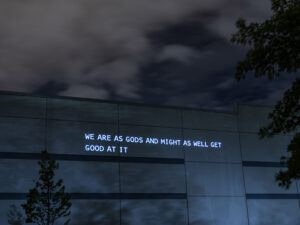
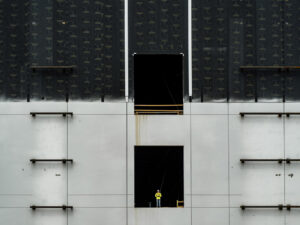
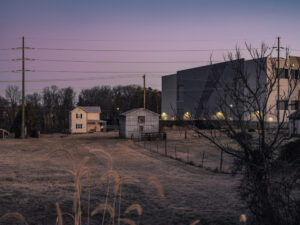
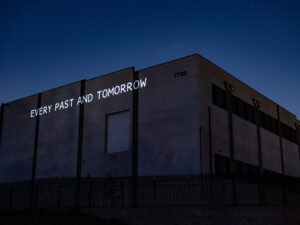
The data center is a structure purpose-built for machines, not people. Standing before one, I feel both awe and antipathy beneath the constant, low hum of cooling fans. They are windowless, the color of an overcast sky, and designed to disappear. For three years I've traced fence lines, forded streams, and pushed through underbrush in a corner of Northern Virginia that holds the largest concentration of data centers on Earth. I’ve coupled my documentation of them with a more direct approach, by projecting words across their unadorned surfaces to create a record of the disquiet and apprehension I feel when I’m photographing them.
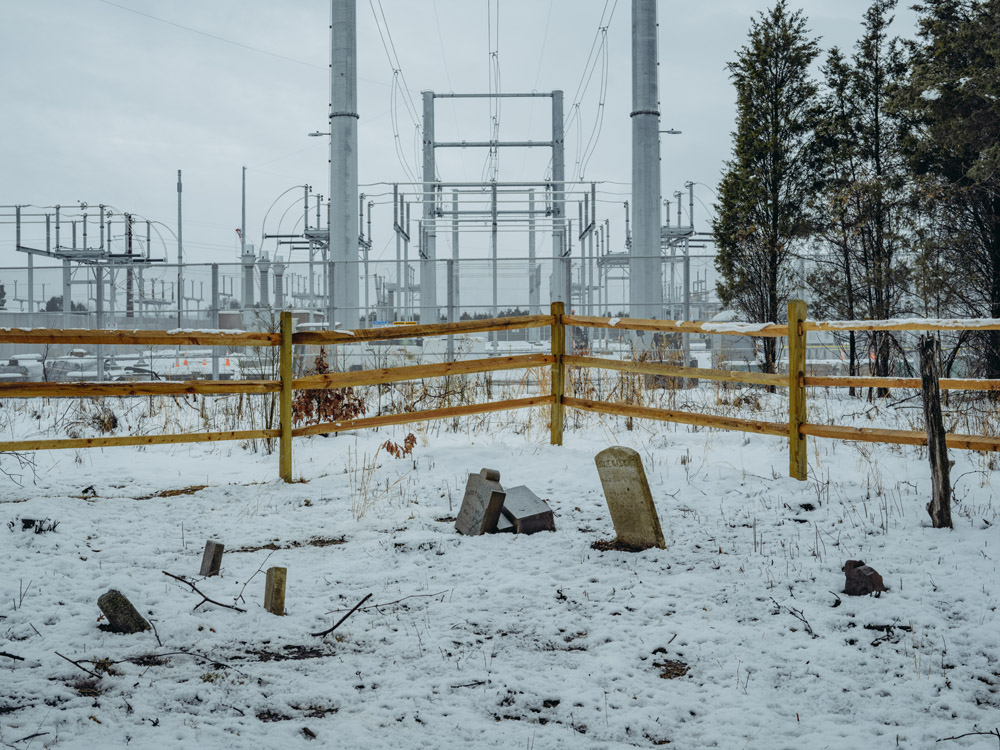
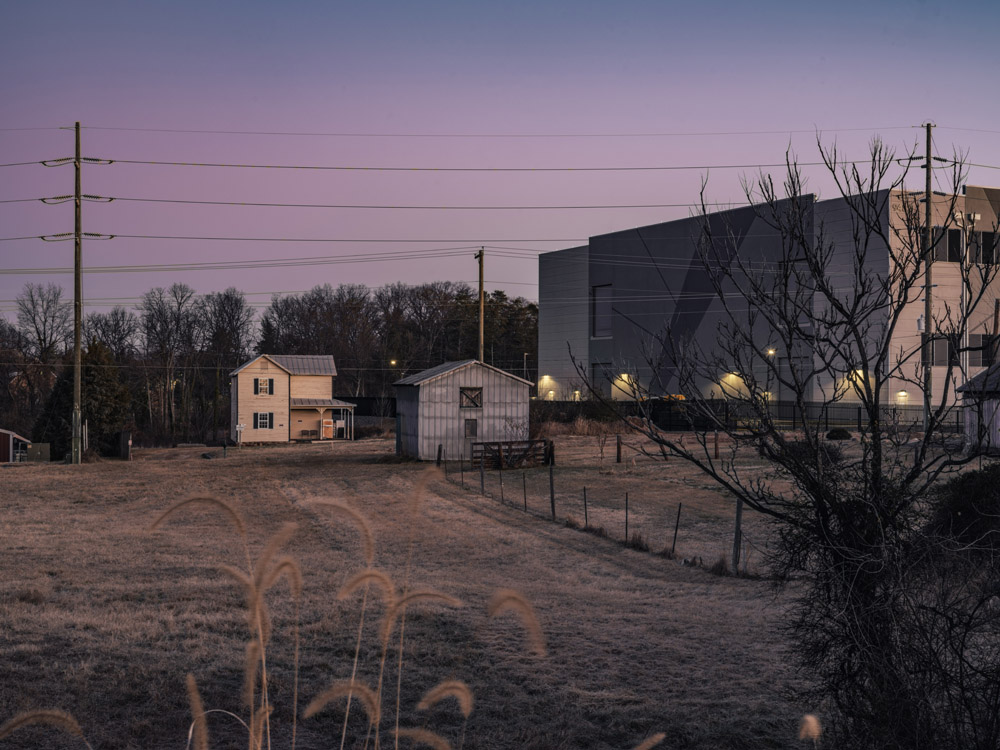
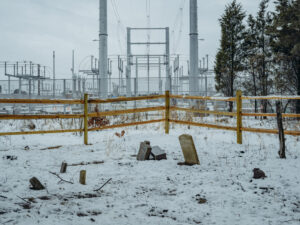
To build in Virginia is to confront history. Wandering between an old brick yard and a data center, I stumbled onto the gravestones of Revolutionary War soldiers. At Tippett's Hill Cemetery in Sterling, a data center wraps around three sides of the site containing grave markers of enslaved people, dating to the 1700s.
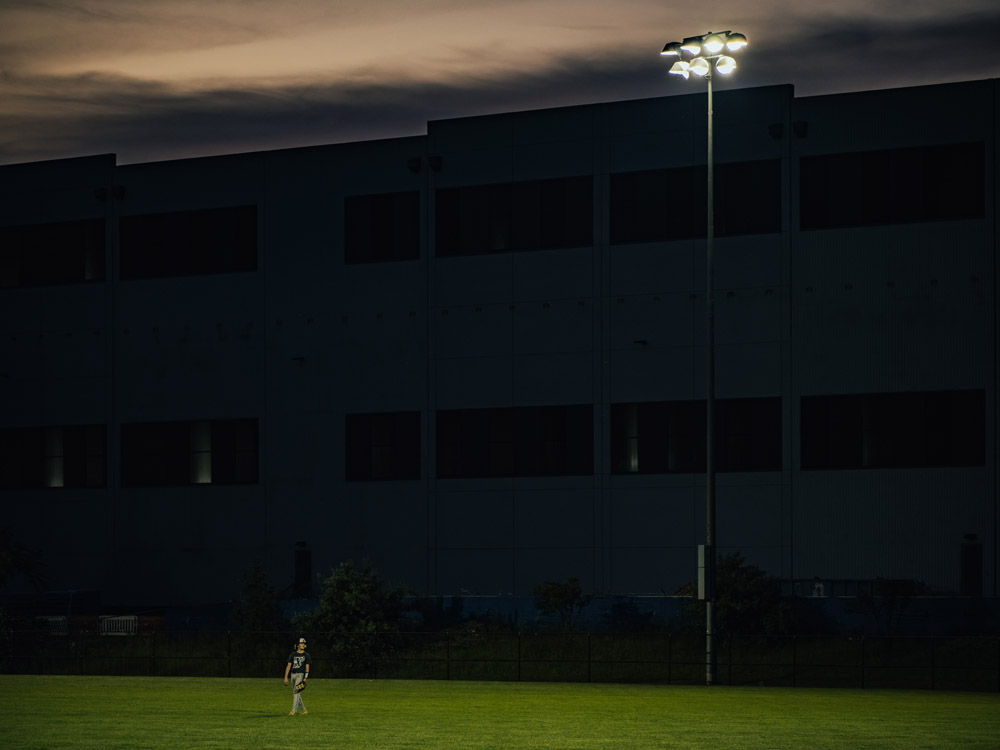
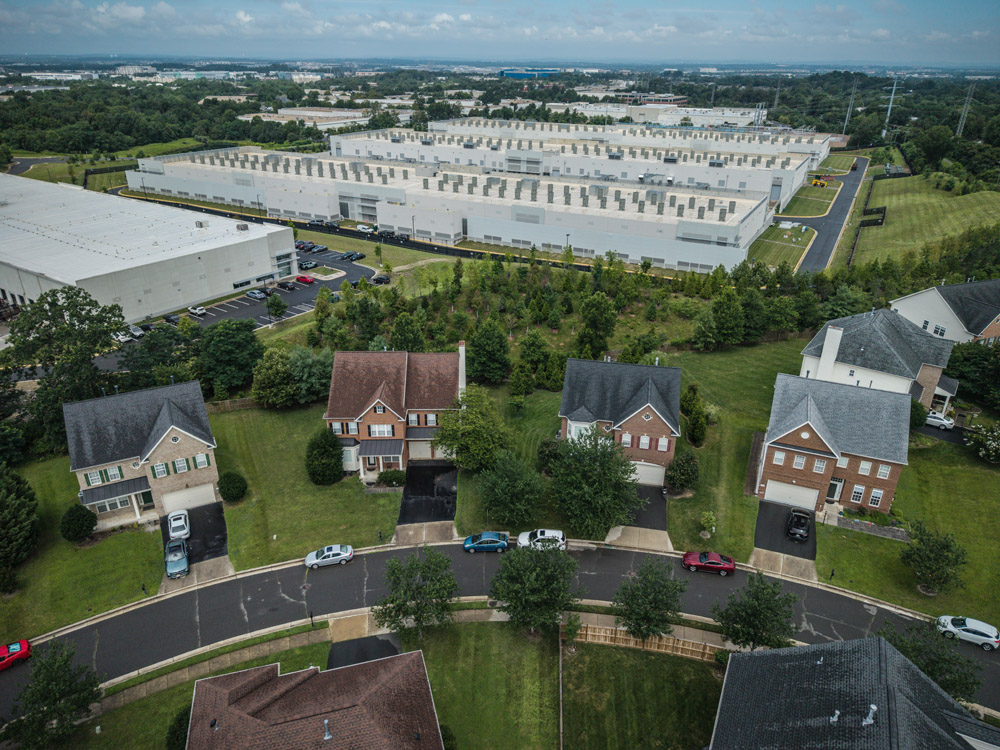
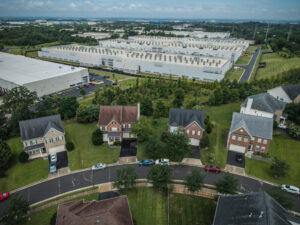
These structures churn through data, pushing bits through fiber-optic cables buried deep in the red clay. They facilitate our frictionless, digital lives without reckoning with the toll borne by those who live nearby. The buildings loom over baseball fields and townhomes, each needing as much electricity as a small city.
These photographs give "The Cloud" a body and a place. The data center is the definitive architecture of our time: a symbol of our limitless ambition and the steep, unseen price it exacts.